Concomitant EGFR mutation and EML4-ALK gene fusion in non-small cell lung cancer. Print this page
" _' s9 `$ F: j9 c9 W7 ^4 y! d2 d! X% B$ W
/ d$ U* i6 F) t- ^8 ?* BSub-category:
+ S9 Y9 ^- O4 l! ^; O4 tMolecular Targets
$ G$ u9 A$ T9 H8 j# ~- N, A% `: t3 c/ |1 @5 U& x' R3 L( B8 B
1 n* s* A# Y& d2 G
Category:( d* ~) o( M$ w) F# N% m" E
Tumor Biology 6 `4 l* a& X4 Q: p3 @
9 T* _6 j" O' v( j# Q, n, s) w, c! e8 f" K
Meeting:- F+ k* S- f( d- j
2011 ASCO Annual Meeting
: Z$ l" P. u. O
8 g) |9 r1 V9 E
9 \! K( {7 |2 n' [! |Session Type and Session Title:
7 [/ s8 W, z) }5 xPoster Discussion Session, Tumor Biology , [$ d: t7 D% L a* C5 T
# j) S) f) t$ }; U
0 U5 m- }+ d) r& U$ J% M! C. _- T2 n0 C
Abstract No:5 P) b# W6 ~# B" S- K7 k
10517 # J- p5 r! X3 J
0 L: u8 \5 b; T2 r" ^, V0 o2 V, s' x0 J; ~0 c1 W$ n# z
Citation:
3 H# O4 \. s* S) c% `3 I# CJ Clin Oncol 29: 2011 (suppl; abstr 10517) & r" ~: V) u* G" a
( k0 s+ J- I! C7 ?; X! c( W. f3 w( a
Author(s):2 K5 b2 D. i& O. {
J. Yang, X. Zhang, J. Su, H. Chen, H. Tian, Y. Huang, C. Xu, Y. L. Wu; Guangdong Lung Cancer Institute, Guangdong General Hospital & Guangdong Academy of Medical Sciences, Guangzhou, China; Guangdong Lung Cancer Institute, Medical Research Center of Guangdong General Hospital, Guangzhou, China; Guangdong Lung Cancer Institute, Guangzhou, China; Guangdong Lung Cancer Institute, Guangdong General Hospital & Guangdong Academy of Medical Sciences, Guangzhou, China 9 a$ n9 l6 a9 y
$ o* \3 [$ Q. D
& `* A ^. z M- U, T& ~4 Y+ }9 c8 Q+ {7 V: o* b2 j
Abstracts that were granted an exception in accordance with ASCO's Conflict of Interest Policy are designated with a caret symbol (^) here and in the printed Proceedings.. {3 }$ y. R1 W# p6 w
( y- E& ^0 n4 t( yAbstract Disclosures7 t* {$ ^7 L0 Q( A* C& z
9 i6 K! V+ S9 K5 P+ ^
Abstract:
+ H: d6 [8 C% f2 t6 O
: n' z- E4 ^& i7 J
9 l( z2 q$ |' yBackground: The fusion of the anaplastic lymphoma kinase (ALK) with the echinoderm microtubule-associated protein-like 4 (EML4) and epidermal growth factor receptor (EGFR) mutations are considered mutually exclusive. Advanced non-small cell lung cancer (NSCLC) patients with EML4-ALK did not benefit from EGFR tyrosine kinase inhibitors (TKIs). Methods: Multiplex reverse transcriptase-polymerase chain reaction (RT-PCR) followed by sequencing was performed for EML4-ALK fusion status detection. EGFR and KRAS mutations were determined by direct DNA sequencing. Positive results of EML4-ALK fusion were also confirmed by RACE-coupled PCR sequencing. Results: From April 2010 to January 2011, 412 patients (398 with NSCLC; 14 with SCLC) were tested for mutation status of EGFR, KRAS and EML4-ALK respectively. Frequency of EML4-ALK fusion was 10.6% (42/398) in NSCLC patients. No patients with SCLC were found to have positive EML4-ALK fusion. Frequency of concomitant EGFR and EML4-ALK gene mutations was 1.0% (4/398) in NSCLC patients, and their variants of EML4-ALK gene mutations were Variant 1 (3 patients) and Variant 6 (1 patient); being never smokers, all of them were diagnosed with advanced (3 with stage †W and 1 with stage IIIB) adenocarcinoma harbouring wild type KRAS. Two female stage †W patients with double gene mutations (1 with L858R and Variant 1; 1 with exon19 deletion and Variant 6) received first-line gefitinib which is one kind of EGFR TKIs and achieved partial response. Conclusions: Though being rare events, NSCLC patients harbouring concomitant EGFR mutation and EML4-ALK gene fusion are sensitive to first-line EGFR TKIs. Whether they could also benefit from ALK inhibition after failure to EGFR TKIs warranted further investigation./ j6 t" t+ ?# S1 P' K- H$ e6 K
* \: X1 p! p! }/ b; H, k 6 R& d$ `$ r( a2 k
|
 汇总4月最新:临床试验招募| 小细胞
"化疗±免疫后进展了,还能怎么办?"——这是许多小细胞肺癌患者和家属的困境。
临
汇总4月最新:临床试验招募| 小细胞
"化疗±免疫后进展了,还能怎么办?"——这是许多小细胞肺癌患者和家属的困境。
临
 需要加论坛患者群的朋友们看这里
本帖最后由 青菜567 于 2024-7-22 17:38 编辑
与癌共舞小助手-29新进论坛需要进入患
需要加论坛患者群的朋友们看这里
本帖最后由 青菜567 于 2024-7-22 17:38 编辑
与癌共舞小助手-29新进论坛需要进入患
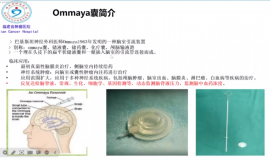
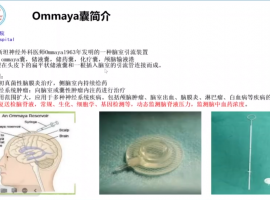 神奇的ommaya囊——学习笔记
一个神奇的装置-ommaya囊——————9.28 苗茜医生科普讲座
直播链接:https://live.
神奇的ommaya囊——学习笔记
一个神奇的装置-ommaya囊——————9.28 苗茜医生科普讲座
直播链接:https://live.
 母亲肺腺癌晚期骨转移,EGFR21突变,
母亲1970年出生,56周岁,身高163cm,体重98kg(196斤)。2025年9月23日肺炎住院,胸
母亲肺腺癌晚期骨转移,EGFR21突变,
母亲1970年出生,56周岁,身高163cm,体重98kg(196斤)。2025年9月23日肺炎住院,胸
 临床试验招募| 铂类化疗失败后的经治
🔥 项目题目:AL8326片治疗至少接受二线治疗方案后疾病进展或复发的小细胞肺癌患者
临床试验招募| 铂类化疗失败后的经治
🔥 项目题目:AL8326片治疗至少接受二线治疗方案后疾病进展或复发的小细胞肺癌患者
 11011102001537 )




 0 A* I/ u* W3 ]% ^. G0 W
 显身卡
显身卡